MOLECULAR BIOLOGY LABORATORY
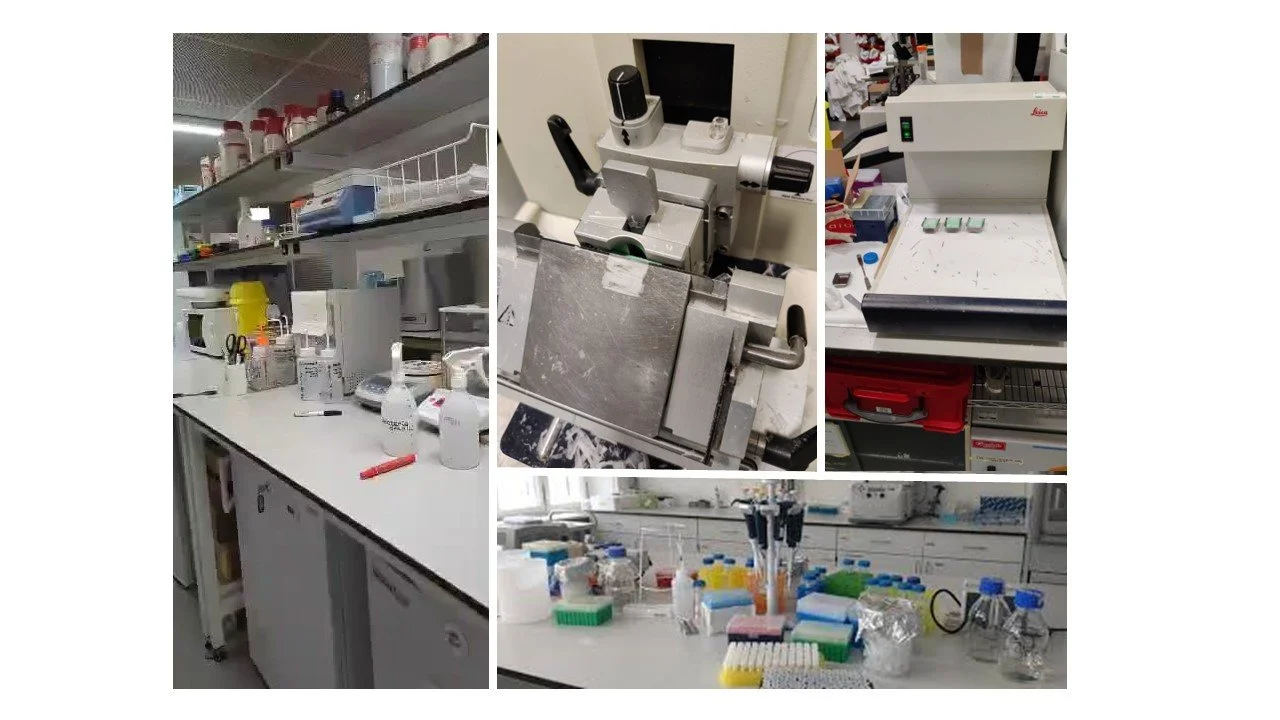
Within the molecular biology section of our lab, molecular biology techniques are employed to develop several projects. This laboratory focuses on studying DNA, RNA, proteins, and gene regulation. The tasks performed usually fall into several categories: sample preparation, molecular analysis, genetic manipulation, and data interpretation. Here are the main tasks typically done in our lab:
Sample collection and preparation: Collecting biological samples (cells, tissues, blood, microbes)
Extracting DNA, RNA, or proteins
Purifying nucleic acids
Preparing buffers and reagents
Labeling and storing samples (in ultra-low freezers)
DNA analysis and manipulation:
Polymerase Chain Reaction (PCR) to amplify DNA
Gel Electrophoresis to separate DNA fragments
DNA Sequencing to determine nucleotide order
Molecular Cloning to insert genes into vectors
Gene editing using CRISPR-Cas9
RNA and gene expression studies:
Reverse Transcription PCR (RT-PCR) to study RNA
Quantitative PCR (qPCR) for gene expression levels
RNA isolation and purification
Transcriptome analysis
Protein analysis:
Western Blot to detect specific proteins
ELISA to quantify proteins
Protein purification
Enzyme activity assays
Main equipment include: PCR machines, Electroporator, refrigerated centrifuges, incubators, ultrasonic cell disintegrator - with 3/4 disruptor (sonicator) Western blot, gel electrophoresis, vacuum evaporator, and a fast performance liquid chromatography (FPLC) system.

PROTEIN SYNTHESIS for single molecule studies: We generate proteins compatible for single molecule experiments such as AFS or for use with magnetic tweezers. Bacterial plasmid vectors (bacterial DNA) are used to fuse the protein (or the domain) of interest with specific tags and this vector is grown in E. coli bacteria which are then induced to produce the fusion product. This final product can then used in further single molecule studies.
In our lab all proteins are produced to carry a histidine (his) tag. Ni-NTA beads, which carry high affinity to histidine (Immobilized metal affinity chromatography), can then be used for purification of the protein of interest from the pool of other bacterial proteins. Alongside the his tag, we are able to generate proteins with various additional tags according to the final application. For example; for magnetic tweezers experiments an avidin tag is introduced to the protein of interest. This tag is biotinylated during protein expression and the final biotinylated protein then can be used with avidinated magnetic beads.
